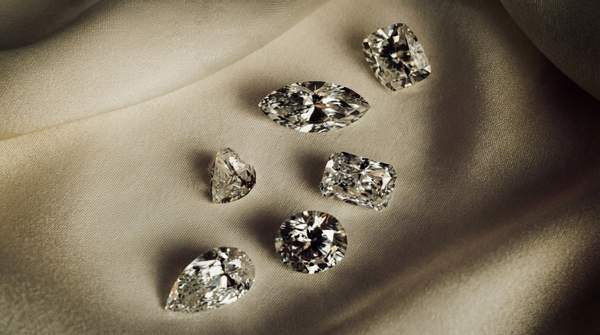
The three most consequential diamond cuts of the past three centuries—the Old Mine cut, the Old European cut, and the modern round brilliant—can be told apart at a glance once you know what to look for. The Old Mine cut is a soft, squarish cushion with a small table, a high crown, and a large eye-visible culet that throws broad flashes of colored light. The Old European cut is round, more symmetrical, with a smaller culet and a tall crown that favors fire. The modern brilliant has a larger table, a lower crown, and a culet so small it looks invisible to the naked eye, producing the sharp, fast sparkle we now treat as the standard. These differences are not accidents of craftsmanship; they are the visible record of changing tools, lighting, and aesthetics.
The Enduring Allure of Diamond Cuts: A Historical Journey
A diamond's cut is one of the most important factors influencing its beauty and personality, and cutting styles have evolved alongside advances in technology, changing fashion, and improvements in lighting. Each historical period introduced styles designed to maximize a diamond's beauty while reflecting the tastes of the time, as the antique diamond specialists at M. Kantor & Associates explain. That framing matters for identification: an antique stone was not a failed modern brilliant. It was engineered—by hand—for the light sources and sensibilities of its own era.
The sequence to keep in mind runs from the hand-cut, candlelit Old Mine cut of the 1700s, through the rounder Old European cut of the late 1800s and early 1900s, to the standardized modern brilliant. Estate Diamond Jewelry's Benjamin Khordipour describes the Old European cut as "the bridge between the old-mine diamond and the modern brilliant diamond," with the Industrial Revolution driving rapid advancement in cutting technique. A transitional style that emerged in the late 1800s, refined as cutting technology advanced, bridges the Old European and modern round brilliant.
Old Mine Cut: The Candlelight Sparkle
The Old Mine cut is defined by its soft squarish or cushion-like outline with rounded corners—a shape that often reflects the natural octahedral structure of the rough crystal. Its table is small, typically 38% to 45% of the diamond's diameter, compared with 53% to 64% for brilliant cuts. The crown is high, and the culet is a wide, flat platform left parallel to the table because early cutting technology could not produce an exact pointed tip. Viewed from above, that open culet is often visible without a loupe.
Every one of these stones was cut and polished by hand, often by candlelight, as Jack Weir & Sons notes—each unique to the hand that cut it, rather than to a set of specifications. Because each rough diamond was shaped to optimize its own form rather than a modern standard, the cut carries what that jeweler calls an undeniable drama. Its larger facets produce more fire and more intense color: broad, slower flashes rather than the tight sparkle of a modern stone. That performance was tuned for candlelight, the dominant light source of its era.
Old European Cut: A Step Towards Precision
The Old European cut is distinctly round, with a smaller culet than the Old Mine cut, and it is considered a direct precursor to today's round brilliant. According to the Gemological Institute of America's guide to old mine cut diamonds, its origins trace back to the early 1700s alongside the old mine cut, but its roundness reflects a later era of cutting technique. Compared with the modern round brilliant, it features a higher crown and greater total depth.
Those proportions have optical consequences. Ouros Jewels notes that the Old European cut's taller crown creates a deeper appearance and greater dispersion of light, resulting in colorful flashes known as fire, while its smaller table distinguishes it from the modern brilliant. Many Old European stones have a visible or open culet—a small flat facet at the bottom tip that is a hallmark of antique cuts and, in some stones, one you can see straight through. The result is a cut that trades some of the modern brilliant's crisp return of white light for a softer, more colorful display.
Modern Brilliant Cut: The Pinnacle of Sparkle
The modern round brilliant is the endpoint of this evolution: a stone mapped in specialized machinery to determine its shape before cutting begins, then shaped to standardized proportions. Its table runs 53% to 64% of the girdle diameter, its crown sits lower than either antique style, and its culet is formed on a cutting wheel so precisely that it looks invisible to the naked eye. Where an Old Mine cut was coaxed out of a rough crystal, a modern brilliant is engineered to a specification.
The payoff is scintillation. Mechanization gave cutters the precision to enhance sparkle through improved symmetry and proportions, and the modern cut's tighter facet arrangement returns light in the rapid, sharp flashes that contemporary viewers expect from a diamond. Notably, the number of facets on an old mine cut and a modern brilliant is similar, as one diamond retailer's guide points out—the transformation lies not in facet count but in proportion, symmetry, and finish. The aesthetic shift is from broad romantic flash to concentrated brilliance.
The Evolution of Diamond Cutting: From Handcraft to High-Tech
The pivotal invention was the bruting machine, which arrived in 1873 and mechanized the rounding process, giving cutters far greater precision and control. GIA credits it with enabling more perfectly round diamonds with improved symmetry and proportions that enhanced scintillation. This is the technological hinge between the antique and modern worlds: before it, cutters worked rough crystals by hand under candlelight; after it, roundness and repeatability became achievable.
The rest of the story is standardization. By the early 1900s, gemstone cutting had centralized in a few key places and consistent uniformity was widely achieved across the industry, as Chicago jeweler Christopher Duquet recounts. The transitional cut of the late 1800s marks the visible step between the Old European and modern round brilliant. In an ironic modern coda, Duquet observes that lab-grown diamonds—cheap to produce and cut without concern for waste—have brought old cuts back into fashion, allowing experimentation at little cost.
Side-by-Side Comparison of Diamond Cut Styles
The table below contrasts the three cuts across the features you can inspect with the naked eye or a loupe. Read each row as a causal chain: the era's tools and lighting set the physical proportions, and the proportions set the optical effect.
| Feature | Old Mine Cut | Old European Cut | Modern Brilliant Cut |
|---|---|---|---|
| Typical era | Early 1700s onward; hand-cut era | Late 1800s to early 1900s | Post-transitional, 20th century to present |
| Overall shape | Soft squarish cushion with rounded corners, often following the rough crystal's octahedral form | Distinctly round and more symmetrical | Perfectly round, cut to standard specifications |
| Table size | Small: 38%–45% of diameter | Smaller than a modern brilliant's | 53%–64% of girdle diameter |
| Crown height | High crown; deep appearance | Higher crown and greater total depth than the modern brilliant | Lower crown |
| Culet size | Large, open, eye-visible platform parallel to the table | Smaller than the Old Mine's; often visible or open | Shaped on a cutting wheel; looks invisible to the naked eye |
| Primary optical effect | Broad, slower flashes of fire and intense color, optimized for candlelight | Deep appearance with strong dispersion and colorful fire | Enhanced scintillation: sharp, rapid sparkle from precise symmetry |
Two identification shortcuts fall out of this comparison. The culet is the quickest way to separate an antique cut from a modern one: if you can see a flat window through the stone's center, it is not a modern brilliant. The table is the second check—anything in the high-30s to mid-40s percent range signals an Old Mine cut, while the mid-50s to mid-60s range signals a brilliant.
Identifying Diamond Cuts: A Practical Guide
When evaluating a diamond, particularly an antique one, observe its overall shape, table size, crown height, and culet to determine its cutting style and appreciate its unique historical and aesthetic qualities. Work from the outline inward: a cushion outline with rounded corners points to an Old Mine cut; a round outline with a tall crown and visible culet points to an Old European; a round stone with a large table, low crown, and no visible culet is a modern brilliant. Note that GIA grades old mine cut diamonds for color, clarity, and carat and records culet size and girdle finish, but does not assign a cut grade on the report—so identification rests on your own inspection.
The measurable indicator of success is the ability to correctly identify an Old Mine, Old European, or Modern Brilliant cut diamond based on visual inspection of its key features. Test yourself against the table above: check the outline, estimate the table against the girdle, look for the culet through the crown, and confirm your call before reading any paperwork. Each correct identification confirms you can read a century of cutting technology directly from the stone.
Sources
- Diamond Cuts Through History | Antique Diamond Guide — M. Kantor & Associates
- Brilliant Cut Diamond Vs. Old Mine Cut Diamond — Estate Diamond Jewelry
- Old Mine Cut vs Old European: A Guide - Jack Weir & Sons
- Old Mine Cut Diamond Guide — GIA 4Cs
- Round Brilliant VS Old European Cut: 5 Core Difference To Know — Ouros Jewels
- Loosegrowndiamond
- What is an Old Mine Cut Diamond? — Christopher Duquet