Not every art-luxury collaboration wants the same thing. When Louis Vuitton hands its monogram to Yayoi Kusama, it is pursuing a different objective than a house that curates an exhibition inside its boutique, or one that aligns itself with an auction house to burnish its cultural credentials. The evidence from fashion-business analysts and academic research points to three distinct strategic approaches—product co-creation, immersive experience, and narrative marketing—each with its own primary goal and its own logic for when a brand should deploy it.
Product Co-Creation: Wearable Art and Exclusivity
The most visible strategy puts the artist directly onto the product. Louis Vuitton's partnerships with Takashi Murakami, Richard Prince, Yayoi Kusama, and Stephen Sprouse produced what fashion journalist Long Nguyen describes as "massive commercial work in making sell-out handbags at an unimagined scale for the world's biggest luxury fashion brand." In his analysis for The Impression, no other house has fused art, luxury, and commerce so seamlessly or at such pace.
The strategic logic here is tangible: the collaboration merges art and luxury into a physical good, enhancing desirability and perceived value. A polka-dotted handbag is not merely decorated; it carries the artist's signature into the consumer's everyday life, converting a familiar silhouette into a collectible. Writing from the Miami School of Fashion and Design, a strategist who identifies as both artist and brand consultant names art-inspired collections among the innovative strategies art enables, alongside pop-ups and exhibition-style window displays.
Co-creation suits a brand whose objective is the product itself—renewing merchandise that, as Nguyen observes, "requires a new story even if the merchandise feels more familiar than new." The artist supplies that story in material form.
Immersive Experiences: Engaging Consumers Beyond the Product
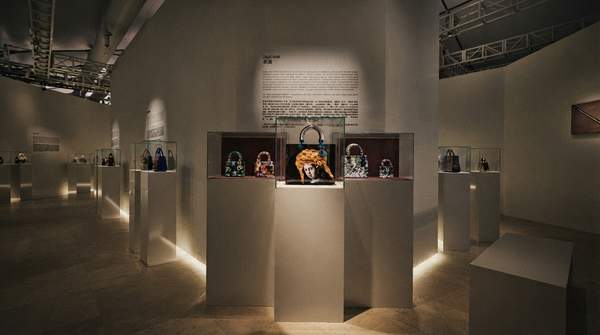
A second strategy moves art off the product and into the store. Rather than commissioning a print or a pattern, the brand transforms its retail environment into a cultural destination. Nguyen's reporting describes houses working to turn each location into a "beacon," where in-store art functions as an extension of the fashion show, "converted into segmented immersive experiences conducive to driving the closing of a sale."
The distinction matters. Where co-creation monetizes the object, immersion monetizes the visit. The art exists to captivate, to foster emotional connection, and to reinforce brand identity beyond the transaction itself—redefining what a retail space is for. The Miami School of Fashion and Design's analysis echoes this, citing architecturally influenced pop-up stores and window displays that mimic art exhibits as core tactics in the contemporary luxury toolkit.
This approach fits brands whose challenge is not product fatigue but experience fatigue: when the merchandise is stable, the environment must do the differentiating work. The evidence describes this strategy in general terms—luxury brands using installations and exhibitions—rather than naming specific houses, which itself suggests how diffuse the practice has become.