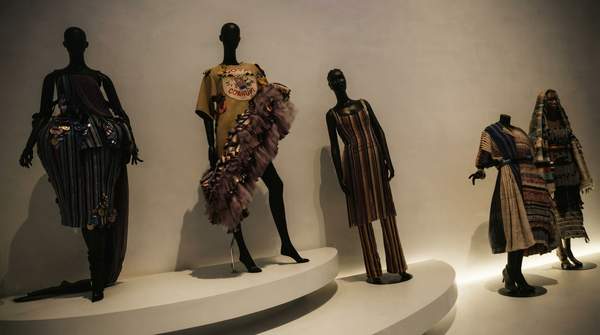
The ethical landscape for curating culturally sensitive textiles is undergoing a profound transformation, challenging museums to move beyond the simple display of beautiful objects toward a more meaningful engagement with living traditions. A growing consensus among cultural heritage professionals calls for a fundamental shift from representation to relationship-building, treating textiles not as static artifacts but as what they truly are: living archives, ancestral technologies, and vessels of collective memory. This evolving standard requires curators to move from a position of sole authority to one of dialogue and collaboration with the communities who remain the primary stewards of these intricate knowledge systems.
This approach reframes the very core of curatorial work, demanding that institutions become, as critic Armando Perla writes in Studio Magazine, "braver, more responsive, more responsible." The central challenge lies in distinguishing between ethical curation, which honors the deep cultural context of a piece, and appropriation, which aestheticizes Indigenous knowledge without the meaningful involvement of its creators.
The Shifting Landscape of Textile Curation Ethics
For decades, museum practices were guided by standards that, while often well-intentioned, centered the institution's perspective. However, ethical standards are not static; as the Journal of Conservation and Museum Studies notes, what was considered acceptable in the past may no longer be, and today's principles will likely evolve. Contemporary museum ethics are increasingly defined by social responsiveness and honesty to the diverse audiences that institutions serve. For textiles with deep cultural roots, this means the curatorial process must extend far beyond the museum walls and into the communities where these traditions are born and sustained.
This evolution demands a fundamental change in approach. In his critique, Armando Perla argues for a decisive move "from representation to relation, from tokenism to trust, from display to dialogue." This perspective reframes textiles as active participants in culture rather than passive objects for academic study or aesthetic appreciation. In many traditions, weaving is a form of world-making, a process that embeds cosmology, history, and social structure into cloth. Each textile can be seen as a repository of knowledge and identity, a tangible link to ancestry and a map for the future. Ethical curation, therefore, is not about extracting an object for display but about engaging with the living traditions and knowledge systems it represents. This requires a deep commitment to building trust and sharing authority with the cultural stewards from originating communities, recognizing their expertise as paramount.