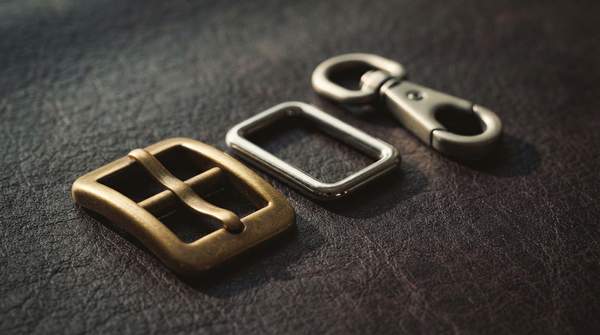
In the realm of luxury handbags, the hardware is far more than a mere functional component; it is, as Ivy Alexander suggests, the "jewelry for your bag," defining its silhouette and contributing significantly to its longevity. The deliberate choice of hardware material profoundly impacts a handbag's perceived value, enduring quality, and overall design integrity, according to SELVANE. But how does one discern true quality amidst a myriad of marketing claims? The answer lies in understanding the material science, craftsmanship, and long-term wear characteristics of the metals commonly employed.
We often find ourselves drawn to the satisfying weight of a turnlock or the buttery glide of a polished zipper, yet the unseen mechanics of these elements are what truly protect our investment. To make informed choices about quality and longevity, it becomes essential to delve into the distinct properties of solid brass, zinc alloy, and stainless steel—the primary contenders for luxury handbag hardware.
Material Properties: Brass, Zinc Alloy, and Stainless Steel
When we consider the foundational elements of handbag hardware, the inherent qualities of each metal dictate its potential for lasting strength and aesthetic retention. Let us examine the core material properties that set solid brass, zinc alloy, and stainless steel apart.
Solid brass, an alloy primarily composed of copper and zinc, typically exhibits a density ranging from 8.4 to 8.7 grams per cubic centimeter, as detailed by Thomasnet and Sincere. This density contributes to its characteristic weight, strength, and durability. Brass is also known for good corrosion resistance, particularly in mild environments, according to Jude Steel and PartMFG. However, it is generally softer than stainless steel, a characteristic that influences its susceptibility to wear.
Zinc alloy, in contrast, is notably lighter than both brass and stainless steel. While this might appeal to designs prioritizing lightness, OYC and Ageless Iron Hardware indicate that it is also softer and inherently less durable than its counterparts. This relative softness is a critical factor in its long-term performance.
Stainless steel stands out for its superior strength and high resistance to corrosion. Its protective qualities are particularly enhanced by a chromium content of 10.5 percent or more, making it suitable for even harsh environments, as PartMFG notes. SELVANE further highlights that high-grade 316L stainless steel can offer 20-30% greater corrosion resistance compared to other materials. Its inherent hardness also positions it as a more robust option against physical wear.