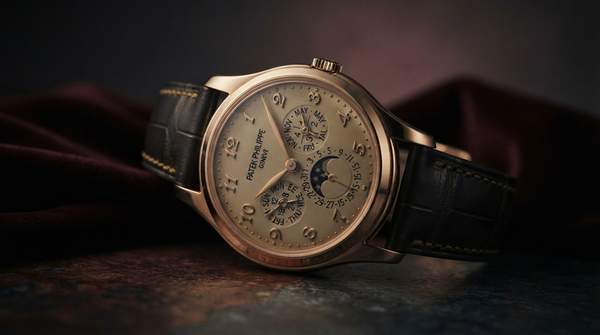
The decision to restore a vintage timepiece presents a fundamental conflict for any owner: the choice between preserving its unique history, complete with the imperfections of age, and reviving its original aesthetic and functional condition. This is not a simple question of repair, but a philosophical one. According to guidance for collectors, where corrosion or deterioration has compromised a watch's appearance and longevity, a "sympathetic restoration" can transform it while remaining faithful to its character. The key is understanding where the balance lies, a judgment that comes from experience.
Serious collectors often prefer watches in completely original, unrestored condition, accepting flaws as part of the timepiece's authentic story. However, ensuring a watch remains a usable, long-lasting instrument often requires intervention. Navigating this choice requires a clear understanding of the different levels of work that can be performed and a component-by-component evaluation of the trade-offs involved.
Understanding the Spectrum of Intervention
The terms for working on a vintage watch are often used interchangeably, but they describe distinct philosophies and levels of intervention. Rather than a simple choice to restore or not, owners can select an approach along a spectrum that ranges from minimal maintenance to a complete overhaul.
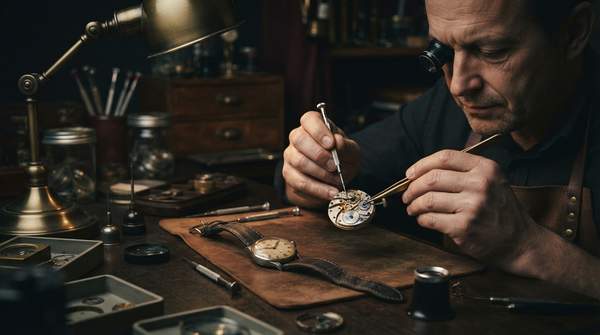
At one end is servicing, which is defined as preventative maintenance. In this process, every part of the watch's movement is dismantled, cleaned, inspected, and lubricated before being reassembled, regulated, and tested. The goal is purely functional, aimed at ensuring the watch runs correctly while preserving all original components.
In the middle lies sympathetic restoration. This approach addresses significant flaws that compromise the watch's appearance or longevity but seeks to retain its original character. It is a balanced method, aiming to correct serious deterioration without erasing the signs of a watch's history.
At the other end of the spectrum is full restoration. The objective here is to return the timepiece to its original aesthetic and functional state. This can involve extensive work, from refinishing the case and polishing the crystal to replacing worn or damaged parts in the movement, all to revive the watch's original beauty and performance.