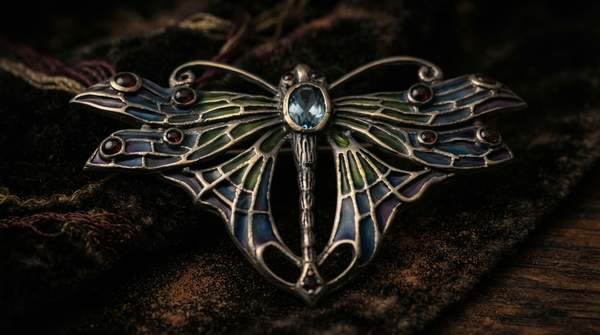
Plique-à-jour enameling is a highly specialized technique that creates a stained-glass effect by applying transparent enamel to metal cells without a backing, allowing light to pass through. Often referred to as "backless cloisonné," this method is distinguished by its luminous quality, which has captivated art collectors and luxury enthusiasts for centuries.
The technique involves fusing specially formulated glass, or enamel, to metal, typically gold or silver. This intricate process is known for its technical difficulty, high failure rates, and time-consuming nature, contributing to the rarity and value of surviving pieces. Its application has evolved significantly across different historical periods, reflecting diverse aesthetic and material uses.
Mastering the Craft: Primary Plique-à-jour Techniques
Plique-à-jour enameling demands significant patience and skill due to its complex nature and high failure rate, according to anOrdain. The process involves filling metal frameworks with transparent or translucent enamel, which is essentially glass fused to metal, as described by Plique-a-jour Enamel. There are several distinct approaches to creating plique-à-jour, each with its own set of steps and challenges.
One primary method is pierced plique-à-jour. This technique begins by cutting shapes from a metal sheet, such as silver, to form open cells. A small hole is first pierced through the metal to allow a jeweler's saw to cut around the desired design, as detailed by anOrdain. These open cells are then carefully filled with wet enamel.
Another significant technique is filigree plique-à-jour. This method involves using fine metal wires, often gold or silver, to construct the cell outlines. Benvenuto Cellini, as recounted by Linda Darty in "The Art of Enamelling," described forming gold filigree wire designs inside an iron bowl, held in place with gum tragacanth. After inlaying the enamel, the piece undergoes repeated firing at increasing temperatures until the cells are uniformly filled. Plique-a-jour Enamel further explains that filigree plique-à-jour is a building-up process where gold or silver wires are worked over a metal form and soldered together.
Some plique-à-jour techniques also incorporate the use of temporary backings during the initial stages of the process. Materials like mica or burnished copper foil can support the enamel during firing, and are subsequently removed once the enamel has set. Other methods rely solely on surface tension to hold the enamel in place without any temporary support, anOrdain notes.