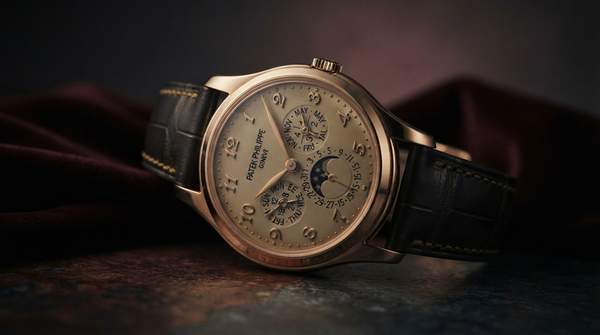
The three most coveted complications in luxury watchmaking—the perpetual calendar, the minute repeater, and the tourbillon—earn their prestige not from added practicality but from extreme mechanical complexity and the historical innovation required to build them. A "grand complication" is generally understood as a timepiece combining complications from multiple categories: timing, calendar, and astronomical functions, often containing hundreds or even thousands of parts. This guide defines each mechanism, traces its origins, and explains why collectors rank them at the summit of horology.
Understanding Watch Complications: Beyond Timekeeping
A watch complication is any function beyond the basic display of hours and minutes. That definition spans everything from a simple date window to mechanisms of extraordinary sophistication. Horological writers generally group complications into three families: timing complications such as the chronograph, split-seconds, and minute repeater; calendar complications such as the perpetual and annual calendar; and astronomical complications such as the moon phase.
While definitions vary, most experts agree that a true grande complication must include at least one complication from each of these three categories, according to Gray & Sons' guide to luxury watch complications. Such pieces represent the pinnacle of watchmaking achievement, and their prices reflect the extraordinary skill and countless hours their creation demands—with some pieces reaching into the millions of dollars. The three complications examined below are the ones most consistently cited as the elite of this elite.