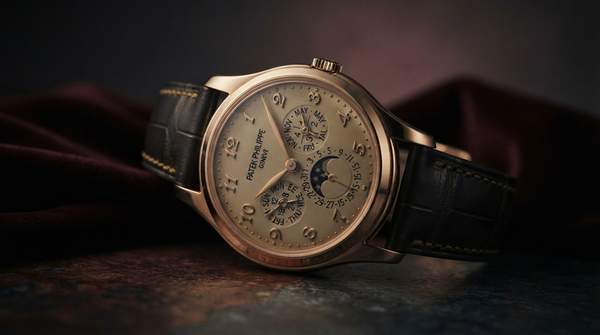
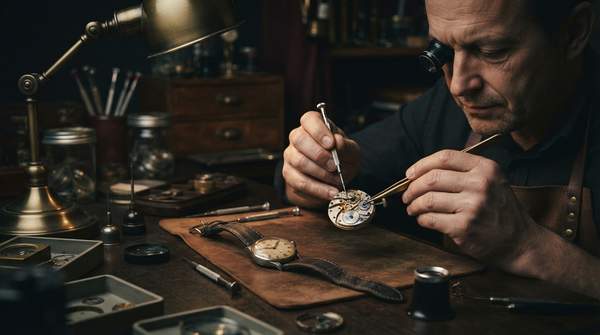
Haute horlogerie is not a complication count. The term refers to the absolute finest of high watchmaking, and the complications that define it earn their prestige through three measurable qualities: mechanical complexity, meticulous craftsmanship and finishing, and in-house development. A watch with a simple date window can be a luxury product; a watch that combines a perpetual calendar, astronomical functions, and a minute repeater in a single hand-finished, in-house movement is something else entirely. Here is the framework that explains the difference, and the complications that embody it.
Defining Haute Horlogerie: The Pinnacle of Watchmaking
Horology—horlogerie in French—is the study or science of time and watches, and the prefix "haute" marks its highest expression. But as Kiran R notes in a beginner's guide to haute horology, defining the category is not simple: not all luxury watches qualify, and watches do not even have to be highly complicated to be considered haute horlogerie. In that account, perhaps the single defining characteristic is the craftsmanship and finishing of the timepiece itself.
Complications still matter enormously. As the watch marketplace Chrono24 explains, the first and most obvious detail to examine is the movement and the complications built into it—additional functions that do more than display hours, minutes, and seconds, whether the watch is hand-wound or automatic. The Fondation de la Haute Horlogerie, the industry body for fine watchmaking, formalized this judgment in its White Paper on Fine Watchmaking, a document that—together with accompanying brand evaluations—took three years to complete and establishes principles across seven areas of expertise, including R&D, design, production, in-house movement production, movement finishing and decoration, and quality.
Pillar 1: Mechanical Complexity and Innovation
The first pillar is engineering difficulty. In watch terminology, a complication is any function other than telling the time, and the more complications a watch carries—particularly intricate ones—the harder the mechanical movement driving it becomes to build. Complexity is therefore not decoration; it is a direct measure of the skill required to design, machine, and assemble a mechanism that performs multiple functions from a single power source.
This is why complications sit at the center of any evaluation of fine watchmaking. A movement that tracks the date, the phases of the moon, and a second time zone simultaneously demands far more from its designer than a three-hand movement. The industry's own benchmark for this pillar is the grand complication, discussed below, which represents the most complex achievements of fine watchmaking. Complexity alone does not confer haute horlogerie status—but without it, a watch cannot reach the category's highest tier.