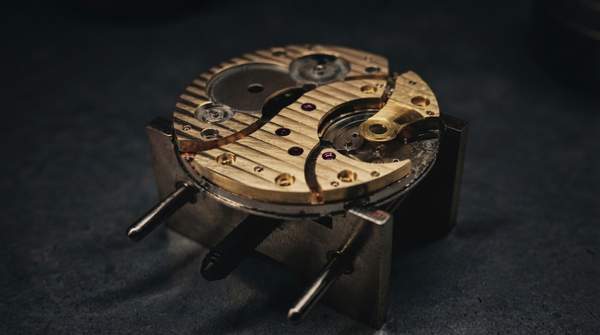
For horology enthusiasts and collectors, the intricate finishes applied to a watch movement are not merely decorative; they are profound indicators of craftsmanship, historical lineage, and ultimately, a timepiece's value in the collector market. Among the most revered techniques are Côtes de Genève, Anglage, and Perlage, each offering distinct visual characteristics, execution methods, and functional benefits. Understanding these differences allows collectors to appreciate the artistry involved and make informed judgments about a watch's pedigree and desirability.
These finishing techniques, while not directly impacting a watch's timekeeping accuracy, reveal the dedication and skill invested by the watchmaker. They transform functional components into a canvas of subtle beauty, often visible through an exhibition caseback. The quality of their execution, particularly the distinction between hand-applied and machine-assisted processes, directly correlates with a watch's perceived craftsmanship and its appeal to discerning collectors.
Côtes de Genève: The Signature Stripes
The Côtes de Genève, or Geneva Stripes, is an ornamental finish that emerged in Geneva, Switzerland, during the late 19th century. It quickly became a hallmark of Swiss Made watches and is a requirement for timepieces seeking the prestigious Poinçon de Genève (Geneva Seal) certification, as noted by Cortina Watch. This finish signals a watch's provenance and pedigree, especially when viewed through a transparent caseback.
The technique involves creating a series of perfectly parallel waves or vertical stripes with engraved grooving on the movement's surface. According to Analog:Shift, this is typically achieved with a lathe on premium movements, though mass-produced movements may use elaborate CNC processes. Luxury Time Piece emphasizes that on serious movements, these decorative waves are applied after bridges are shaped, beveled, and polished, ensuring they do not blur the crisp lines of other finishes like anglage. Under magnification, the surface of each stripe should display a fine, even grain, free from chatter marks or abrupt breaks around jewel holes and screw countersinks.
Beyond its aesthetic appeal, Côtes de Genève serves a practical purpose. Analog:Shift explains that, similar to perlage, it helps trap small dust particles, preventing them from interfering with the movement's operation. This dual role of aesthetic enhancement and functional benefit contributes to its enduring presence in haute horlogerie.