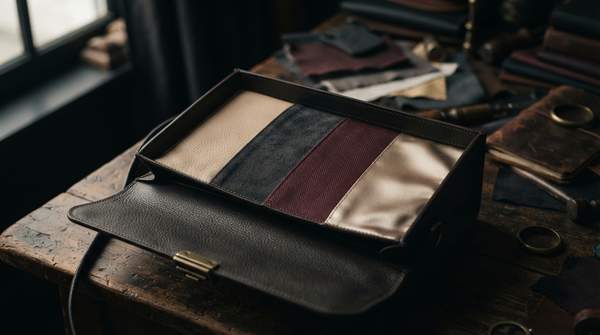
The lining of a luxury handbag is the part of the bag you touch most often and show to others least, and its material determines whether that daily experience feels indulgent or irritating. Four classes dominate the category: leather linings such as goatskin and sheep nappa, premium microfibers like Ultrasuede, natural cotton canvas, and polyester satin. Each trades tactile luxury against durability, weight, and ease of cleaning in a different proportion, and the right choice depends less on price tier than on how you actually carry a bag. This guide compares all four on the same criteria so you can match an interior to your own priorities.
Leather Linings: The Epitome of Tactile Luxury
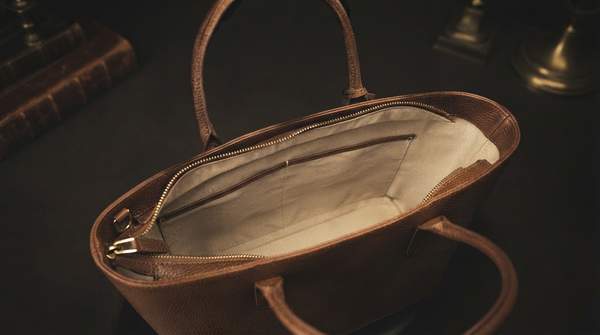
Leather is the traditional choice for interiors that must feel as considered as the exterior. Hab-To Leather House, a leather supplier writing for professional bag makers, recommends high-tensile hides between 0.5mm and 1.0mm thick—thin enough to keep a slim profile, substantial enough to protect the interior structure. Within that range, the two most cited options behave quite differently: sheep nappa is prized for a buttery softness that suits luxury turned edges, while goatskin is valued for scratch-resistant durability. The supplier's guidance also emphasizes that leather linings resist peeling over time, a failure mode that afflicts some coated alternatives.
The trade-offs are weight and care. A bag manufacturer's OEM buyer guide from Linghang Leather cautions that genuine suede or leather linings deliver the intended material-led interior but add weight and bulk, particularly where multiple layers meet. For natural leather, that guide advises evaluating color transfer, thickness consistency, and edge treatment before committing. Leather therefore suits owners who prioritize tactile richness and long-term structural integrity over a featherweight carry, and who accept that the specific feel and durability of any given hide vary with grade, thickness, and finish.
Premium Microfibers: Modern Durability Meets Suede-Like Feel
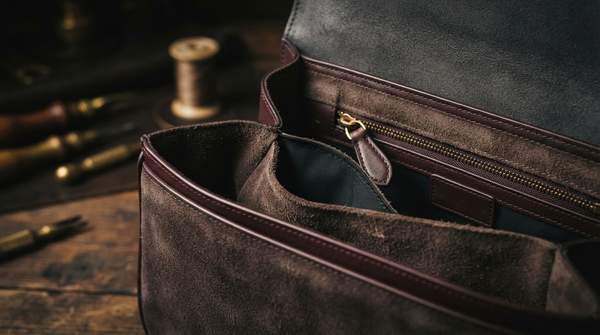
Premium microfiber, including Ultrasuede, occupies the middle ground between leather's luxury and synthetics' practicality. Sorte Inner Bag, a maker of handbag inserts writing about interior materials, describes microfiber and Ultrasuede as valued for an exceptionally soft surface and a sophisticated appearance—a suede-like hand without suede's fragility. The same source positions these materials as the preference of owners of collectible handbags who want a "quieter hand feel and a more elevated finish" than stiffer, crinklier synthetics provide.
Practically, microfiber suede is reported by the Linghang manufacturer's guide to be resistant to stains, which pairs unusually well with its softness: most materials force a choice between delicacy and cleanability, but this class offers both to a degree. The caveats are definitional and qualitative. The Linghang guide notes that the term "microfiber suede" can be ambiguous, and it warns against substituting a synthetic suede-like material for genuine suede without a brand's explicit approval—so a buyer should confirm exactly what a maison means when it cites a suede-textured interior. The quality of the suede-like texture varies among microfiber types, and specific wear resistance varies by manufacturer and product.