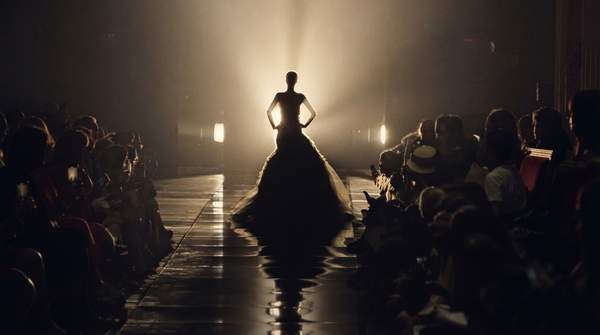
When a designer sends a collection down a lavender field rather than a Parisian hall, the venue is not decoration—it is argument. A fashion show's setting can be read as a deliberate narrative device, one that simultaneously serves the collection's theme and the brand's enduring identity. The useful analytical habit is to sort these choices into strategies, and the evidence supports three broad approaches: repurposing existing architecture, integrating natural landscapes, and crafting immersive abstract worlds. Each transforms space differently, and each carries a distinct symbolic burden.
The Runway as a Narrative Canvas: Beyond the Garment
To an architect, one industry writer observes, a fashion show is never merely a display of garments but "a spatial proposition, a meticulously engineered environment designed to evoke a specific emotional and intellectual response"—one in which the venue's structure and atmosphere co-author the collection's narrative. This marks an evolution in the form itself. As TERAVARNA's Anushrita frames it, runway shows once had a practical purpose: showing clothing to consumers and the press. Somewhere along the way, the presentation became a theatrical performance, then something further—a "world-building exercise."
What does that shift mean in practice? In contemporary shows, designers construct "whole emotional landscapes" around collections, where a show is not only what is worn but what is felt in sequence: lighting changes signal changes in mood, sound design establishes psychological rhythm, and spatial arrangements guide the viewer along a composed path. The garment remains central, but the venue becomes the grammar through which its meaning is delivered.
Why should a culturally attuned reader care? Because these ephemeral constructions—lasting barely fifteen minutes—are designed, as SELVANE's editorial puts it, "with the same rigor and intentionality as any permanent edifice." The temporary cathedral, in other words, deserves the same close reading as the permanent one.
Strategy 1: Repurposing Existing Architecture
The first strategy borrows gravity from buildings that already exist. The relationship between venue and collection here, as SELVANE describes it, is "often a negotiation between legacy and innovation": production teams either transform historical venues to align with a contemporary vision or select spaces that intrinsically embody a forward-thinking spirit. The building's accumulated meaning becomes raw material for the show.
The industrial variant is its most legible dialect. Trade guidance aimed at show producers identifies industrial venues—concrete, steel, exposed brick, warehouse-style lighting—as best suited to streetwear, denim collections, sportswear, and urban fashion brands, precisely because these materials create a strong visual identity that resonates with collections inspired by urban culture. The roughness of the space frames the garment's precision.
But repurposing is not confined to the warehouse. Sometimes the power "lies in the transformation itself," as Spaces & Stories writer Daisy Toomer notes—"the way a space can be reimagined to reflect the futuristic elements of a collection or to highlight a new cultural narrative." The venue's existing character provides one half of a dialogue; the designer's intervention supplies the other. Read this way, an industrial or historical space is never neutral scenery but a co-author whose biography the collection deliberately revises.