The creation of a fine fragrance is often imagined as a solitary act of genius, with a master perfumer, or Nez, cloistered away, conjuring a scent from pure inspiration. The reality of modern haute parfumerie is a far more structured and collaborative process. It is a meticulous discipline where artistic intuition meets scientific rigor, guided by a team of specialists who translate an abstract concept into a final, evocative liquid. This journey from an idea to a bottle involves a finely calibrated workflow, blending creative fantasy with logical thinking to produce a composition where every ingredient is chosen with purpose.
At the heart of this process is the perfumer, an artisan who merges a deep knowledge of organic chemistry with the sensibility of an artist. Their role requires mastering thousands of raw materials and navigating complex safety regulations to transform emotions into stable, wearable narratives. But they do not work alone. The perfumer’s vision is shaped and refined by key partners, including creative directors who set the initial vision and evaluators who act as crucial co-pilots, ensuring the final creation aligns with the original brief. Understanding this team-based dynamic reveals the true nature of fragrance creation: a symphony of specialized talents, not a solo performance.
The Haute Parfumerie Creative Workflow
The development of a fine fragrance unfolds across a series of distinct, iterative stages. This structured process ensures that the initial abstract vision is methodically translated into a finished, market-ready perfume, balancing artistic expression with the client's strategic goals. Each phase involves close collaboration between the perfumer and a wider creative team.
- The Brief and Conceptualization
The process begins not with a raw material, but with an idea. A client, guided by a creative director, provides a brief that outlines the desired fragrance. This concept can be an emotion, a memory, a brand identity, or a narrative. The creative director translates these client needs into a concrete olfactive strategy. The perfumer’s first task is to interpret this abstract brief, tapping into what one perfumer calls a "gut' process" that shares qualities with daydreams and fantasy, to form an initial olfactory concept. - Formulation and Experimentation
With a concept in mind, the perfumer enters the lab. This stage involves the careful selection and harmonization of hundreds of natural and synthetic raw materials. Drawing on a vast olfactory vocabulary and technical expertise, the perfumer crafts initial formulas, or trials. This is a period of intense experimentation, blending art and science to create the first tangible expressions of the brief. Each note is meticulously studied and balanced to build a unique and coherent composition. - Evaluation and Refinement
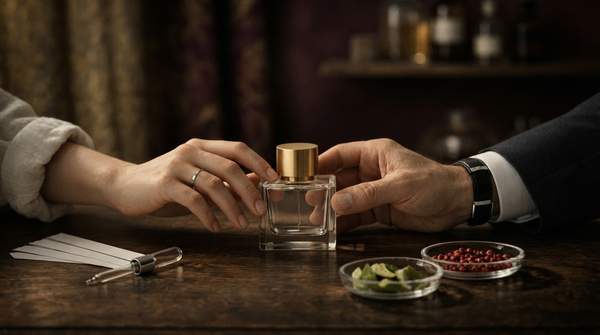
The initial trials are then presented to an evaluator. This key collaborator smells the new compositions and provides critical feedback, acting as a "co-pilot" to the perfumer. The evaluator possesses a deep understanding of the brand’s universe and expectations, guiding the perfumer to refine the formula. This is an iterative loop of feedback and adjustment, where the fragrance is tweaked, re-balanced, and re-tested to ensure it perfectly captures the core identity of the brief. The evaluator helps decide which versions are promising enough to continue developing or to submit to the client. - Final Composition and Approval
After numerous refinements, the most successful versions are presented to the creative director and the client for final approval. The creative director, who has guided the process from the start, ensures the submission aligns with the overarching vision. Once a formula is selected, it becomes the final composition. This concludes a journey that transforms an intangible idea into a precisely engineered and emotionally resonant fragrance.
The Unseen Partners in Scent
While the perfumer is often the only credited creator, their work is profoundly shaped by at least two other critical roles: the evaluator and the creative director. These professionals provide the structure, feedback, and strategic direction that guide the perfumer's artistic exploration from start to finish.
The evaluator is an essential, if rarely mentioned, contributor. Described by evaluator Cynthia Salem of Mane as a "co-pilot," this individual works in deep trust and partnership with the perfumer. They are typically in charge of specific brand accounts, such as those at L'Oréal or Coty, and possess an intimate knowledge of each brand's identity and expectations. The evaluator smells new trials, offers inspiration, and helps translate the abstract language of a brief into a concrete olfactory direction, ultimately deciding which concepts are presented to the client.
The creative director, meanwhile, provides the overarching vision. A job description for a Creative Fragrance Director at Givaudan outlines the role as leading development projects by translating client and business needs into olfactive strategies. This person guides both the creation and evaluation processes, coordinating resources and partnering with commercial teams. In some cases, as with Hedi Slimane at Celine or Tom Ford, the creative director's influence is so central that they maintain the "fiction of the couturier-perfumer," keeping the names of the formulating perfumers hidden to emphasize their own singular creative guidance.
The Dual Mastery of the Nez
To succeed, a master perfumer must cultivate a unique and demanding blend of skills, operating simultaneously as both a scientist and an artist. This duality is essential for transforming an abstract concept into a stable, evocative, and safe final product. The profession requires a delicate balance between the imaginative world of emotion and the precise, physical world of chemistry.
On the scientific side, the role is built on rigorous technical expertise. A perfumer must master an olfactory vocabulary of hundreds or even thousands of raw materials, both natural and synthetic. This knowledge is paired with a deep understanding of organic chemistry and the complex safety standards set by bodies like the International Fragrance Association (IFRA). This technical foundation, often honed through specialist training at renowned institutions and apprenticeships with major companies, allows the perfumer to build stable and compliant formulas.
At the same time, a perfumer must possess profound artistic sensibility. Scent Company notes that beyond technical skill, the role demands creativity, cultural curiosity, and the ability to grasp the essence of a concept and translate it into fragrance. This is the "human touch" that elevates a formula from a mere mixture of chemicals into a "poetic masterpiece." It is this capacity for translation—turning a feeling, a memory, or a brand’s values into a unique olfactory signature—that defines the perfumer’s art.
The Symphony of Scent: A Collaborative Masterpiece
The journey of a fine fragrance from a client's brief to a finished bottle reveals that creation is not a moment of isolated inspiration but a structured, collaborative process. The romantic myth of the lone perfumer gives way to the reality of a highly skilled team, where the Nez works in concert with the strategic guidance of a creative director and the critical feedback of an evaluator. This partnership ensures that artistic vision is honed, refined, and perfectly aligned with its intended purpose.
For those who appreciate the art of perfumery, the key is to recognize that fine fragrance creation is a highly structured and collaborative endeavor, requiring a diverse team beyond the perfumer. A measurable indicator of this growing transparency in the industry will be the consistent crediting of evaluators and creative directors alongside perfumers in new fragrance launches, acknowledging the full symphony of talent behind every scent.
Sources
- Behind the scenes of the creative process — Nez
- What is a perfumer: the artist behind the scent — MARC-ANTOINE BARROIS
- Global Fragrance Creative Director Job in New York, NY at Givaudan — Mediabistro
- Perfumerflavorist
- Master Perfumers: who they are and what they do — Scent Company